.avif)


Why Fragmented Tools Quietly Erode Revenue, Exhaust Teams, and Weaken the Guest Experience, and What Operators can do About it.
6-minute read
KEY FACTS :
• Fragmented technology stacks reduce customer lifetime value by 20-30% in hospitality and experience-led businesses (McKinsey).
• Frontline teams lose up to 40% of their time to manual work caused by disconnected systems (Skift × Deloitte).
• Experience-led companies that unify customer data outperform peers by 25%+ in revenue growth over five years (Harvard Business Review).
• “Good enough” technology rarely causes failure, but it consistently limits scale, insight, and loyalty.
“It Works” Is the Most Expensive Sentence in the Room
In conversations with winery owners, estate managers, and tourism operators, one phrase appears again and again: “Our tools aren’t perfect, but they work.”
At first glance, this sounds pragmatic. Wine is made in vineyards, not software. Hospitality is human, not digital. Tourism is experiential, not transactional. But there is an uncomfortable truth behind that sentence. “It works” often means “we have normalized inefficiency.”
In capital-intensive, margin-sensitive industries like wine and tourism, normalization is dangerous. It hides structural drag behind daily busyness. Nothing breaks. Nothing explodes. But nothing scales properly either.
The Real Cost Is Not Failure. It Is Everything That Never Happens
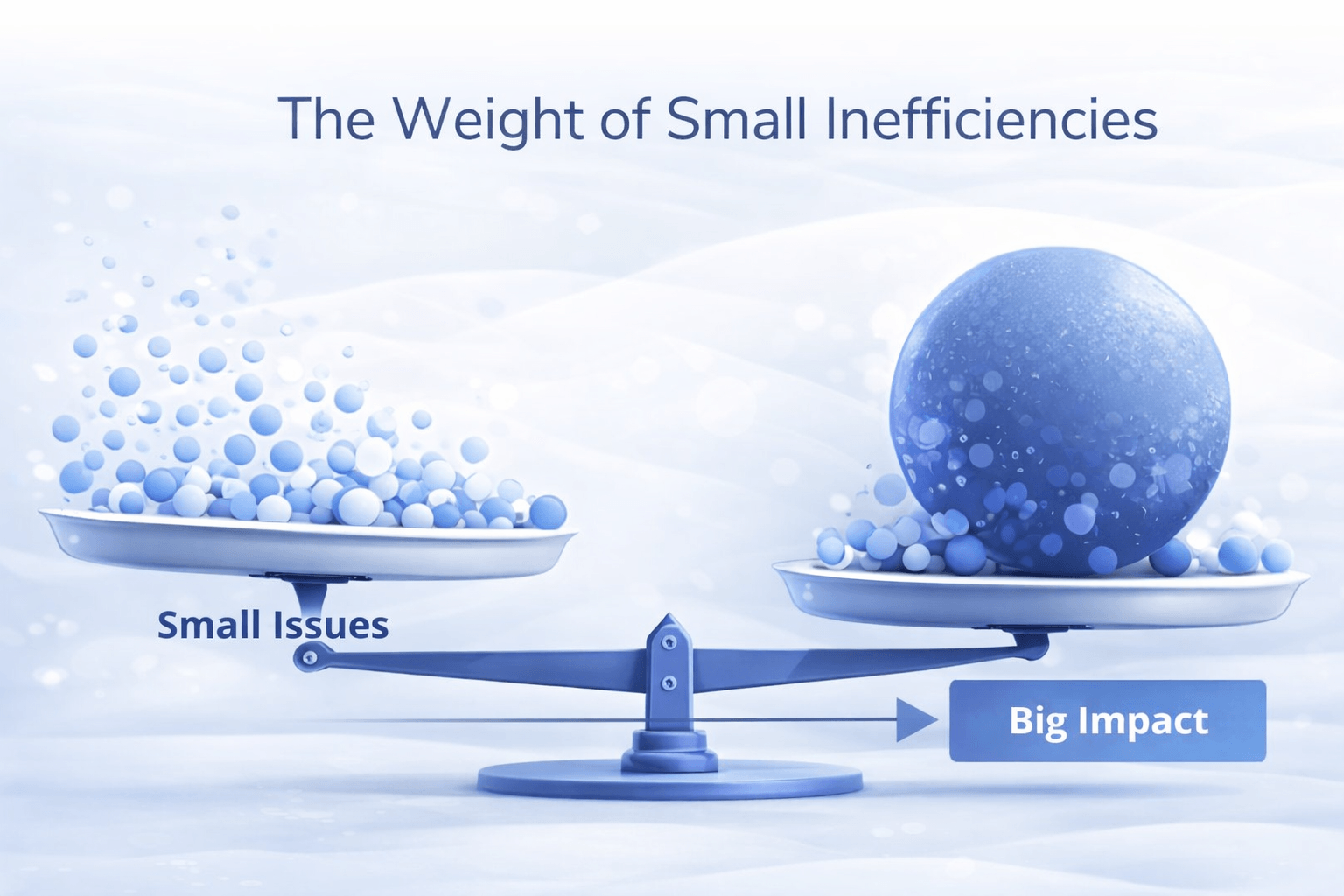
Most operators associate poor technology with obvious pain points: outages, booking errors, angry customers, staff complaints. Those happen. But they are not the core issue. The real damage of “good enough” technology is silent and cumulative.
- Revenue you never capture
- Loyalty you never build
- Insight you never see
- Time your team never gets back
Because none of this appears as a red alert in a dashboard, it is easy to underestimate.

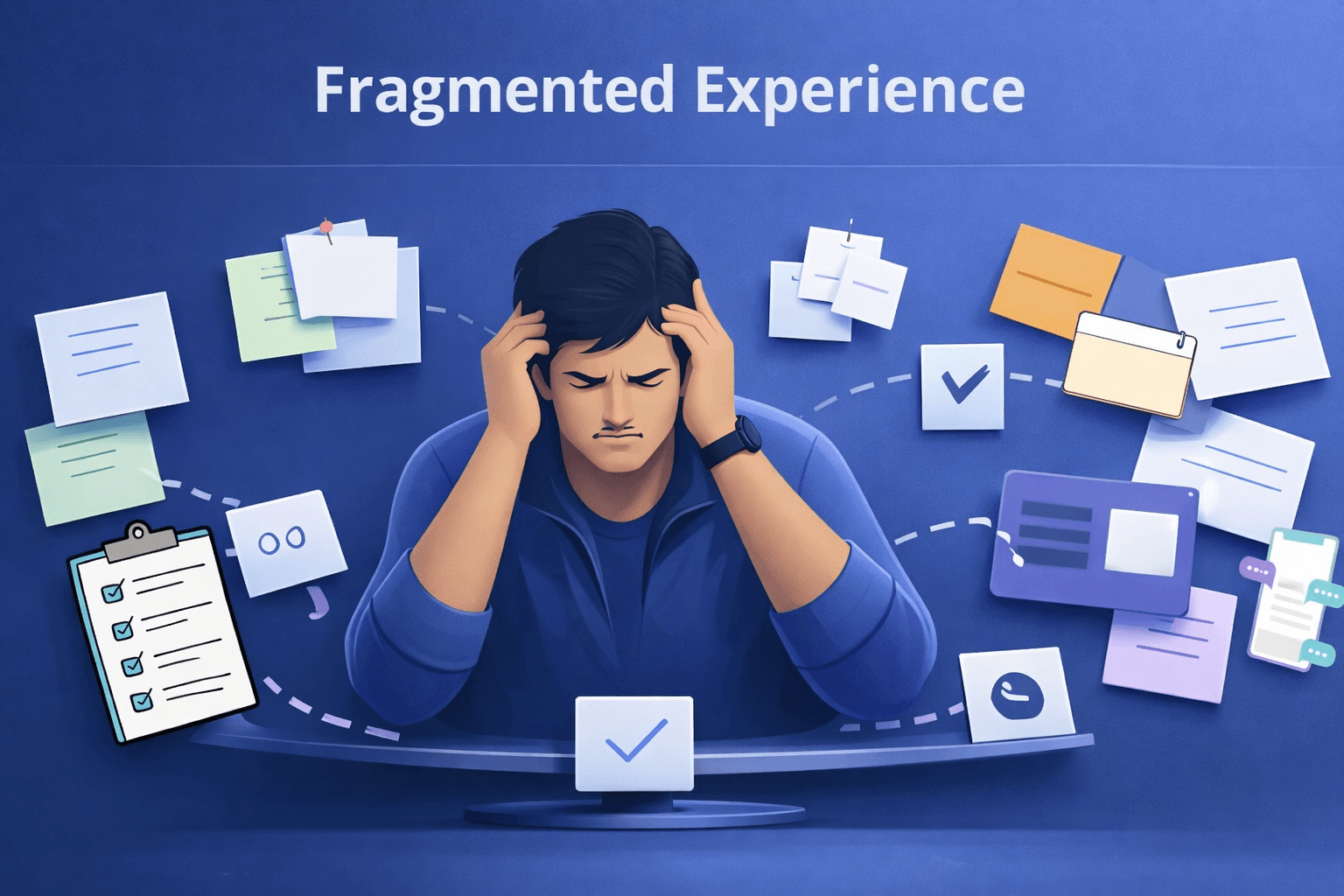
Fragmentation: The Quiet Killer of Experience-Led Businesses
Wine and tourism businesses are structurally complex.
- They sell products and experiences
- They depend on repeat visits and memory
- They operate seasonally, emotionally, and physically
- They span online, on-site, and post-visit moments
Yet many rely on technology stacks assembled opportunistically: one tool for bookings, another for ecommerce, a generic CRM, and spreadsheets to hold everything together.
According to McKinsey research on hospitality digitization, companies operating with fragmented systems see 20–30% lower customer lifetime value compared to those with integrated customer data environments. Not because they try less, but because they cannot act cohesively.
When systems do not talk to each other:
- staff cannot recognize returning guests in real time
- follow-ups become generic
- personalization becomes guesswork
- decisions rely on intuition instead of evidence
In wine tourism, where continuity is the product, this fragmentation is particularly damaging.
Operational Debt: When People Compensate for Broken Systems
When tools fall short, teams adapt. They always do.
They duplicate data, they reconcile information manually, they export, clean, re-upload and they rely on memory for critical guest details.
In operations research, this is increasingly referred to as operational debt. Manual workarounds keep the business running but slowly exhaust it. A 2023 Skift and Deloitte study found that frontline hospitality teams spend up to 40% of their time on administrative tasks caused by disconnected systems. This is not a productivity problem. It is a design failure. Teams may cope heroically, but heroics do not scale.
When the Experience Breaks, Even If the Wine Is Excellent
From the guest’s perspective, technology rarely fails loudly. It fails subtly.
It shows up as:
- re-entering information they have already provided
- receiving generic emails after a deeply personal visit
- being treated like a stranger on a second or third interaction
Decanter and Wine Spectator have consistently noted that modern wine consumers, especially high-value ones, are not buying bottles alone. They are buying context, recognition, and belonging.
When the digital layer fails to reflect the warmth of the physical experience, trust erodes quietly. Not dramatically. Just enough to prevent loyalty from compounding.
Why Generic Tools Consistently Underserve Wine and Tourism
The issue is not that operators choose bad tools. It is that many tools were never designed for the logic of this industry.
Most generic platforms are built for:
- linear transactions
- short sales cycles
- anonymous traffic
- standardized products
Wine and experiential tourism operate differently:
- long consideration windows
- emotional decision-making
- high repeat potential
- strong offline-to-online feedback loops
When systems do not understand tastings, visits, memberships, seasonality, or memory-driven return behavior, businesses are forced to adapt themselves to the tool rather than the other way around. That inversion is where growth limits appear.
What Right-Fit Technology Actually Means, and Why Vintrail Exists
Right-fit technology does not mean more features, more dashboards, or more complexity.
It means alignment.
For wine and hospitality businesses, alignment means systems designed around how guests actually move through an experience: discovery, booking, visit, memory, and return.
This insight is what led to the creation of Vintrail.
Rather than asking wineries and operators to adapt to generic software logic, Vintrail was built to reflect the realities of experience-led businesses. Its focus is not on stacking tools, but on connecting them. Not on adding complexity, but on removing friction.
In practice, right-fit technology looks like:
- a unified view of the guest across booking, visit, and follow-up
- systems that reduce manual work instead of redistributing it
- data that supports decisions, not just reporting
- technology that supports hospitality rather than interrupting it
The best systems do not ask teams to work harder. They quietly allow hospitality to scale without losing its character.
A Final Thought
“Good enough” technology rarely causes a crisis. That is precisely why it is dangerous.
It allows businesses to operate below their potential while feeling functional, busy, and responsible. In industries built on emotion, memory, and return visits, that gap matters more than most leaders realize.
If the wine is singing but the system is mumbling, the guest still hears the mumble.
FAQ
Why does fragmented technology persist in wine and hospitality?
Because it rarely causes visible failure. Most fragmented systems “work” day to day, which allows inefficiencies to go unnoticed. Over time, however, they limit learning, personalization, and growth, especially in experience-led businesses where continuity matters more than transactions.
What is the most common misconception operators have about fixing fragmentation?
That adding another tool will solve the problem. In reality, fragmentation is rarely about missing features. It is about misalignment. Without a connected view of guests and operations, more tools often increase complexity instead of reducing it.
How does Vintrail approach this problem differently?
Vintrail is built around connection rather than accumulation. Instead of adding another layer to an existing stack, it focuses on unifying guest data, experiences, and follow-ups so teams can act with clarity across the entire journey.
What tangible impact does Vintrail have for teams on the ground?
Operators typically see reduced manual work, fewer disconnected workflows, and clearer insight into guest behavior. This allows teams to spend less time managing systems and more time delivering consistent, high-quality hospitality.
What guiding principle sits behind Vintrail's product philosophy?
The belief that technology should stay in the background of hospitality. Vintrail is designed to support better decisions and stronger relationships without forcing teams to adapt their way of working to generic software built for other industries.